Venture Launch & Operations
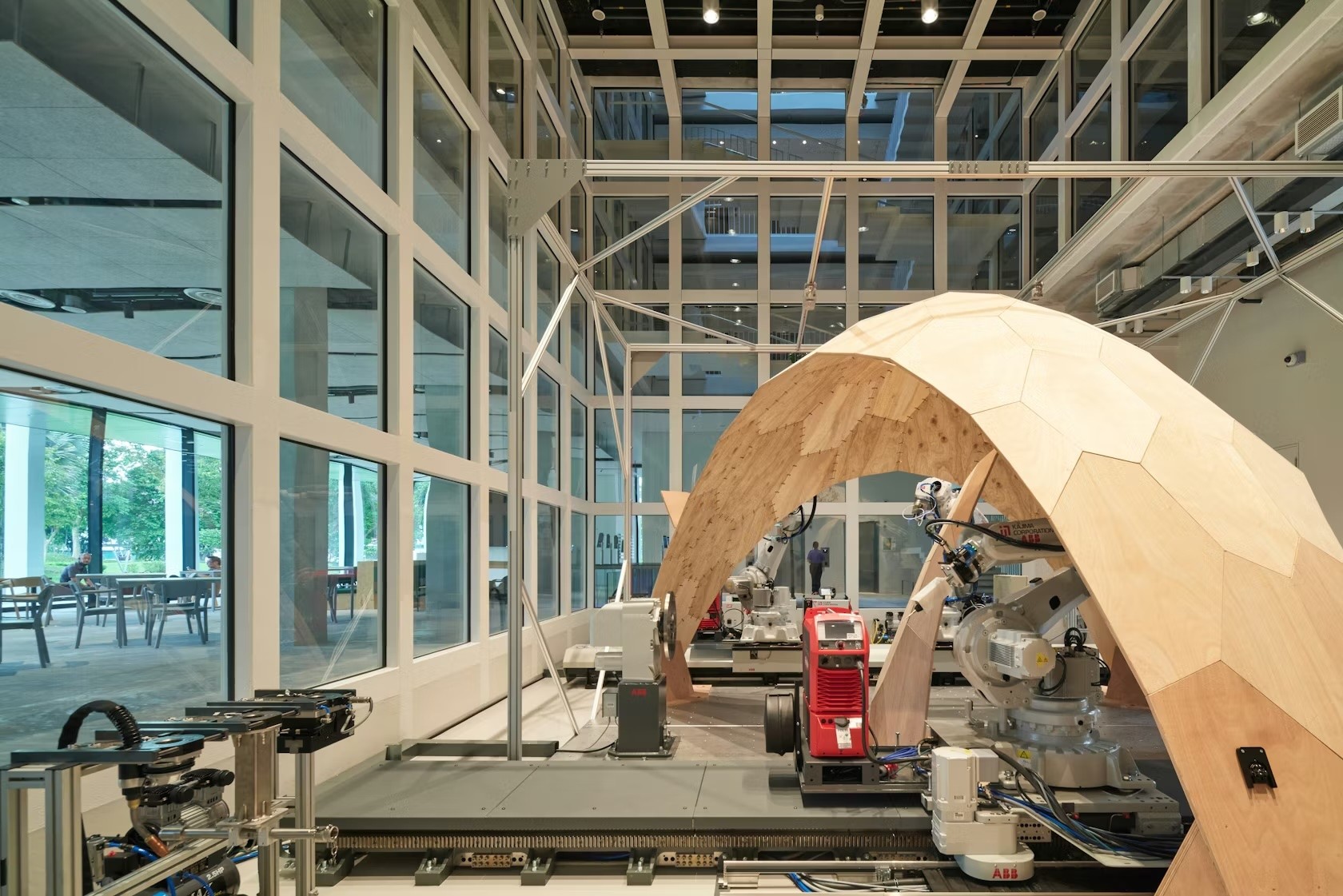
After the success of The GEAR Innovation Hub, I joined the founding team to launch The GEAR by Kajima as a standalone technology services and open innovation subsidiary. Our mission was to turn internal R&D and external startup technology into a commercially viable business by operating the innovation hub, running startup programs, and supporting technology transfer through IP scouting, tailored consultations, and global partnerships.
Everything that existed before was internal, from relationships, programs, and credibility. Taking the entity to market meant rebuilding these foundations in a commercial context, from how we positioned the brand, structured partnerships, and set up the team to operate effectively at scale.

The Challenge
The transition from an internal innovation program to a commercial entity sounds like a natural progression, but in practice, it is an entirely different job. The brand, messaging, and value proposition that worked internally had to be rebuilt for an external market. We needed positioning that could speak to R&D engineers, C-suite executives, startups, and government agencies, while keeping an existing ecosystem engaged and bringing new partners into a business that was still taking shape.
The core challenge was defining a clear value proposition and proving that our work was a value generator, giving potential partners the confidence to commit their resources and trust our new direction.
The Process
Brand & Go-to-Market: Worked closely with R&D teams to develop the brand narrative and commercial positioning. This meant figuring out how to talk about complex proprietary technologies in a way that felt clear and credible across different audiences. Created leadership presentations, business update decks, and external messaging campaigns that brought Kajima’s internal capabilities to life as market-ready solutions.
IP & Commercialization Strategy: Ensured Kajima's proprietary IP, know-how, and technologies were properly protected and packaged for external use. Worked closely with the Intellectual Property Office of Singapore (IPOS) to navigate this process, then organized our solutions into four strategic pillars: resilience, sustainability, wellness, and productivity. Made our innovations accessible to the wider market while communicating the value of accelerating adoption in digitalization, automation, and robotics across the built environment.
Partnerships & Proof-of-Concepts: Used the startup programs as a validation engine, running proof-of-concept and pilot projects with startups and internal teams to generate real-world data, prove commercial viability, and build stakeholder confidence. This approach helped move innovations from experimentation into tangible business outcomes.

The Results
The GEAR by Kajima formally launched at BEX Asia and ConTech Summit, two of the region's most prominent built environment platforms. This marked our transition from a corporate department to a recognized market player, with its own team, board, and budget, providing the mandate needed to operate independently and scale its impact.
The success of our early initiatives also gave leadership the confidence to commit to a long-term commercial roadmap. Two key projects demonstrated the value of this approach:
ConcreteAI delivered two proof-of-concept projects, with their deployment on Kajima sites delivering a 30% productivity improvement in post-tensioning slab processes. This success contributed to wider industry adoption of temperature-matched curing methods.
Betterdata partnered with Kajima's Technical Research Institute Singapore (KaTRIS) through IMDA's Privacy Enhancing Technology Sandbox to build a synthetic data warehouse at The GEAR building. This enabled researchers to access rich datasets without traditional compliance barriers, unlocking AI-driven occupant wellbeing research that would otherwise have been too complex to pursue.
30%
Productivity Improvement
20+
Major Media Features
1
New Venture Launch
Failures & Lessons
When we were preparing for our launch, it was our first time setting up a conference booth and under a tight timeline. I initially became fixated on the aesthetics, spending too much time trying to perfect minor details and attempting to manage the entire design process myself. This quickly became a bottleneck, as I began to divert away from the team’s more critical priorities.
A reality check forced me to step back and reevaluate our core objective. I realized that a visually impressive booth means very little if it fails to spark engagement. So I shifted my approach, outsourcing the aesthetic execution to focus on sharpening our message and designing interactive experiences with our partners. We brought in activities that gave people a reason to stop and engage, which led to more meaningful conversations and stronger lead generation than we initially expected.
This experience reshaped how I approach early-stage ventures: to be intentional about where to invest time, to ask for help when needed, and to realize that having results to show matters more than chasing perfection.
Conclusion
Launching a new venture teaches you things that no amount of planning can prepare you for. Ideas don’t come to life with a slide deck, but come alive when results make skeptics lean in and say, "Okay, I see it now." It pushed me to get better at bridging technical teams and business leaders, making sure emerging technologies did not just stay as interesting ideas, but actually turned into something useful and real.
The biggest takeaway for me was how I approach building from scratch. Success in a 0 to 1 environment is not about perfecting the first version, but creating something agile that can evolve quickly and improve with every iteration.
Venture Launch & Operations
After the success of The GEAR Innovation Hub, I joined the founding team to launch The GEAR by Kajima as a standalone technology services and open innovation subsidiary. Our mission was to turn internal R&D and external startup technology into a commercially viable business by operating the innovation hub, running startup programs, and supporting technology transfer through IP scouting, tailored consultations, and global partnerships.
Everything that existed before was internal, from relationships, programs, and credibility. Taking the entity to market meant rebuilding these foundations in a commercial context, from how we positioned the brand, structured partnerships, and set up the team to operate effectively at scale.
Headquarters
Ottawa, Ontario, Canada
Founded
2006
Industry
E-commerce
Revenue
$1.578 billion (2019)
Company size
5,000+
The transition from an internal innovation program to a commercial entity sounds like a natural progression, but in practice, it is an entirely different job. The brand, messaging, and value proposition that worked internally had to be rebuilt for an external market. We needed positioning that could speak to R&D engineers, C-suite executives, startups, and government agencies, while keeping an existing ecosystem engaged and bringing new partners into a business that was still taking shape.
The core challenge was defining a clear value proposition and proving that our work was a value generator, giving potential partners the confidence to commit their resources and trust our new direction.
The Challenge
The Process
Brand & Go-to-Market: Worked closely with R&D teams to develop the brand narrative and commercial positioning. This meant figuring out how to talk about complex proprietary technologies in a way that felt clear and credible across different audiences. Created leadership presentations, business update decks, and external messaging campaigns that brought Kajima’s internal capabilities to life as market-ready solutions.
IP & Commercialization Strategy: Ensured Kajima's proprietary IP, know-how, and technologies were properly protected and packaged for external use. Worked closely with the Intellectual Property Office of Singapore (IPOS) to navigate this process, then organized our solutions into four strategic pillars: resilience, sustainability, wellness, and productivity. Made our innovations accessible to the wider market while communicating the value of accelerating adoption in digitalization, automation, and robotics across the built environment.
Partnerships & Proof-of-Concepts: Used the startup programs as a validation engine, running proof-of-concept and pilot projects with startups and internal teams to generate real-world data, prove commercial viability, and build stakeholder confidence. This approach helped move innovations from experimentation into tangible business outcomes.
The Results
The GEAR by Kajima formally launched at BEX Asia and ConTech Summit, two of the region's most prominent built environment platforms. This marked our transition from a corporate department to a recognized market player, with its own team, board, and budget, providing the mandate needed to operate independently and scale its impact.
The success of our early initiatives also gave leadership the confidence to commit to a long-term commercial roadmap. Two key projects demonstrated the value of this approach:
ConcreteAI delivered two proof-of-concept projects, with their deployment on Kajima sites delivering a 30% productivity improvement in post-tensioning slab processes. This success contributed to wider industry adoption of temperature-matched curing methods.
Betterdata partnered with Kajima's Technical Research Institute Singapore (KaTRIS) through IMDA's Privacy Enhancing Technology Sandbox to build a synthetic data warehouse at The GEAR building. This enabled researchers to access rich datasets without traditional compliance barriers, unlocking AI-driven occupant wellbeing research that would otherwise have been too complex to pursue.
30%
Productivity Improvement
20+
Major Media Features
1
New Venture Launch


Failures & Lessons
When we were preparing for our launch, it was our first time setting up a conference booth and under a tight timeline. I initially became fixated on the aesthetics, spending too much time trying to perfect minor details and attempting to manage the entire design process myself. This quickly became a bottleneck, as I began to divert away from the team’s more critical priorities.
A reality check forced me to step back and reevaluate our core objective. I realized that a visually impressive booth means very little if it fails to spark engagement. So I shifted my approach, outsourcing the aesthetic execution to focus on sharpening our message and designing interactive experiences with our partners. We brought in activities that gave people a reason to stop and engage, which led to more meaningful conversations and stronger lead generation than we initially expected.
This experience reshaped how I approach early-stage ventures: to be intentional about where to invest time, to ask for help when needed, and to realize that having results to show matters more than chasing perfection.
Conclusion
Launching a new venture teaches you things that no amount of planning can prepare you for. Ideas don’t come to life with a slide deck, but come alive when results make skeptics lean in and say, "Okay, I see it now." It pushed me to get better at bridging technical teams and business leaders, making sure emerging technologies did not just stay as interesting ideas, but actually turned into something useful and real.
The biggest takeaway for me was how I approach building from scratch. Success in a 0 to 1 environment is not about perfecting the first version, but creating something agile that can evolve quickly and improve with every iteration.